How to eliminate setup and maintenance on your headless browser fleet for web scraping
Cleber Alexandre
1 min read ·
It's time to rethink how developers render content and perform browser actions for web scraping.
Headless browsers play an important role in many web scraping applications. They take screenshots and perform user-like actions to access content.
There are plenty of open-source options for small projects, easily integrated with the common web scraping stack.
However, they can slow down the scaling of big projects.
The open-source options are complex. Managing all the combinations necessary to successfully run the automation, hosting and proxy rotation often demands a team of full-time developers.
In this webinar, we presented a new way of deploying headless browsers for web scraping using Zyte API's fully hosted built-in solution.
Join Daniel Cave, Head of Product Marketing, and Fernando Tadao Ito, Technical Team Lead at Zyte, to learn:
Why the traditional and complex headless browser structure is slowing down web scraping developers.
When to choose the hosted alternatives instead of building your infrastructure.
How to start using Zyte API Headless Browser with your current spiders.
Engineer-to-engineer demos and Q&A.
Take control of your data extraction process with Zyte's web scraping solutions.
More webinars
Keep watching
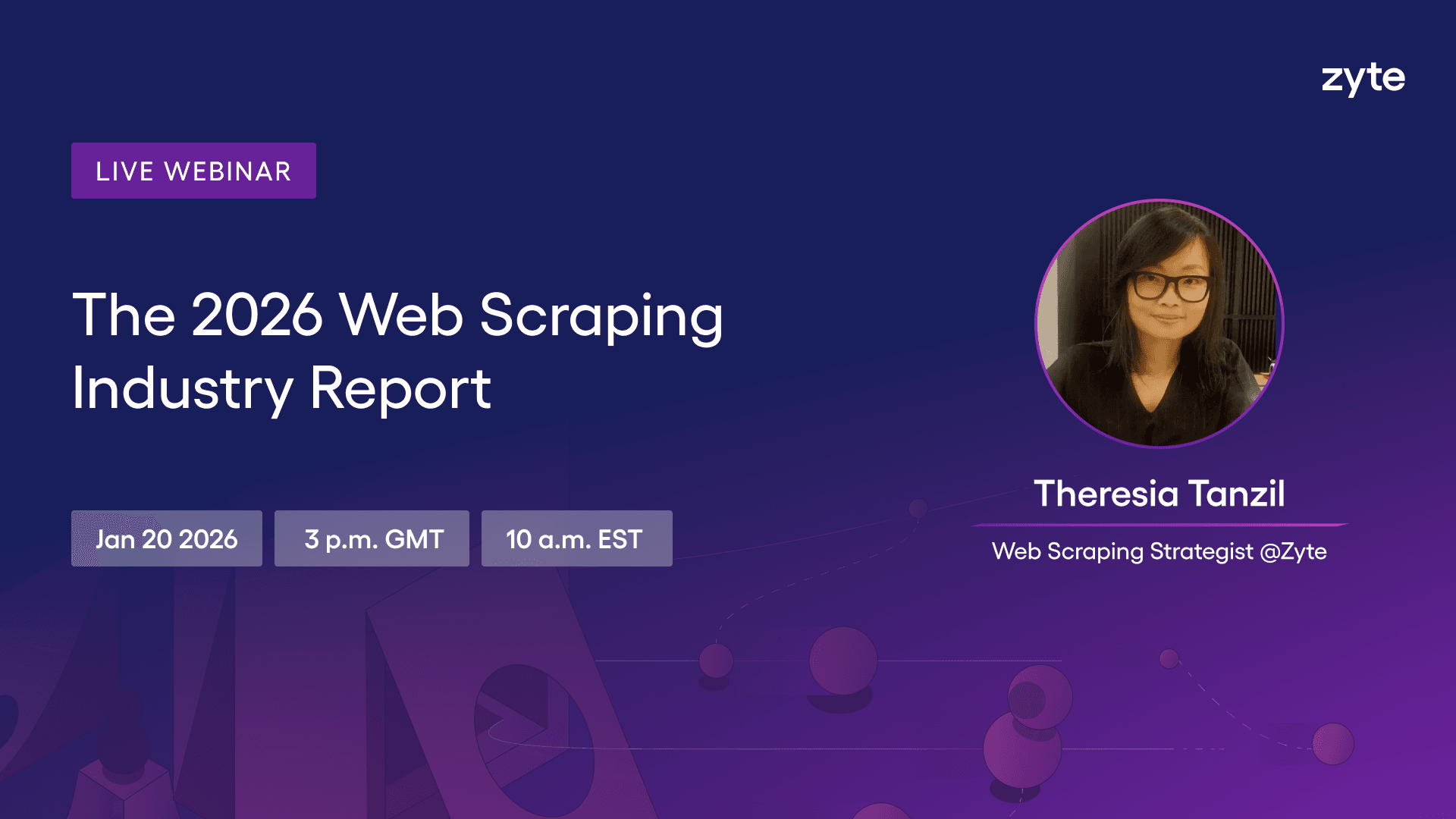 Case study
2026 Web Scraping Industry Report by Zyte
A practical walkthrough of the Web Scraping Industry Report 2026, covering how AI, automation, and access controls are reshaping web data collection at scale.
2 min read
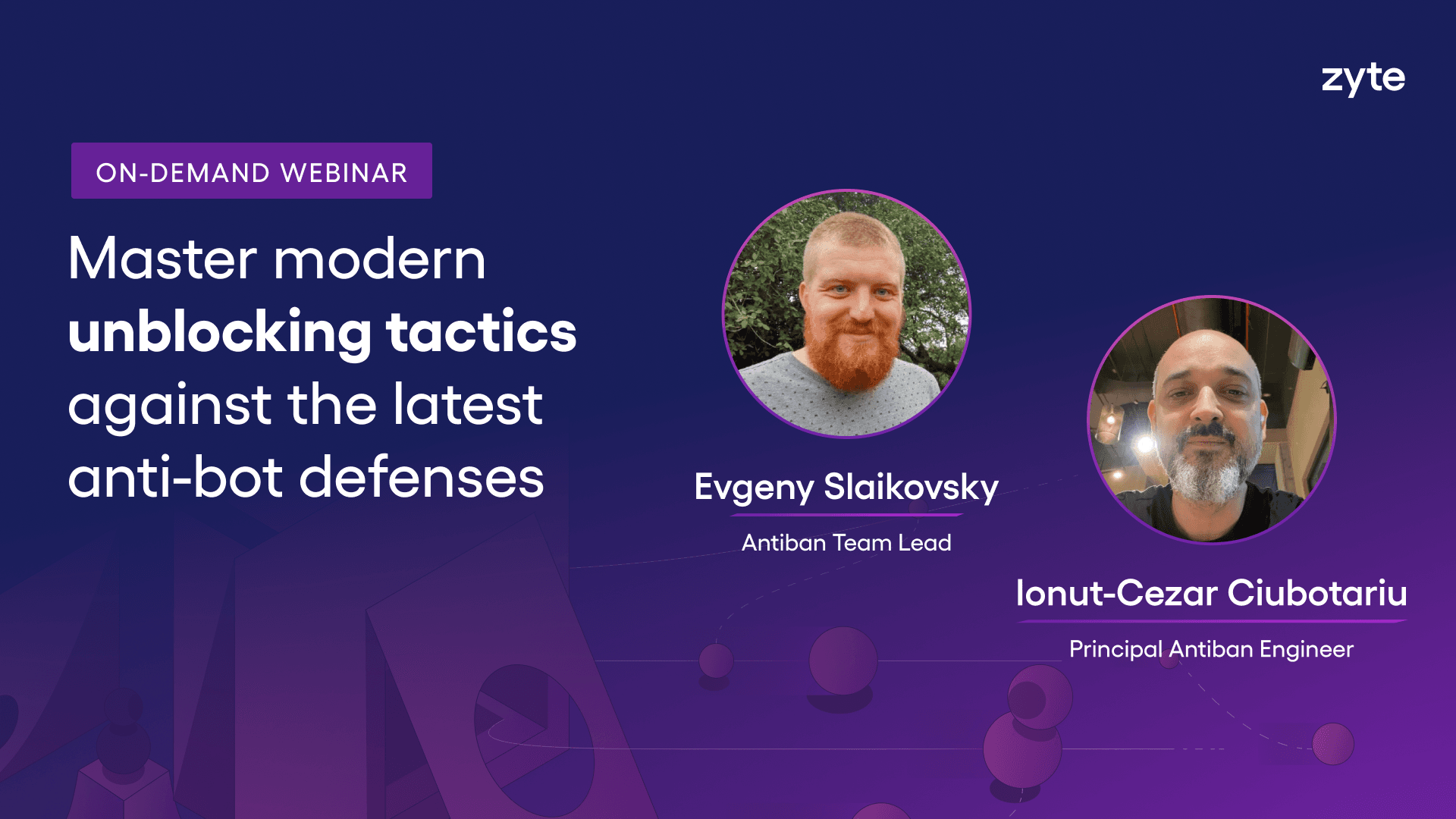 Announcement
Master modern unblocking tactics against the latest anti-bot defenses
Learn how to prepare for modern anti-bot systems with advanced unblocking tactics.
2 min read
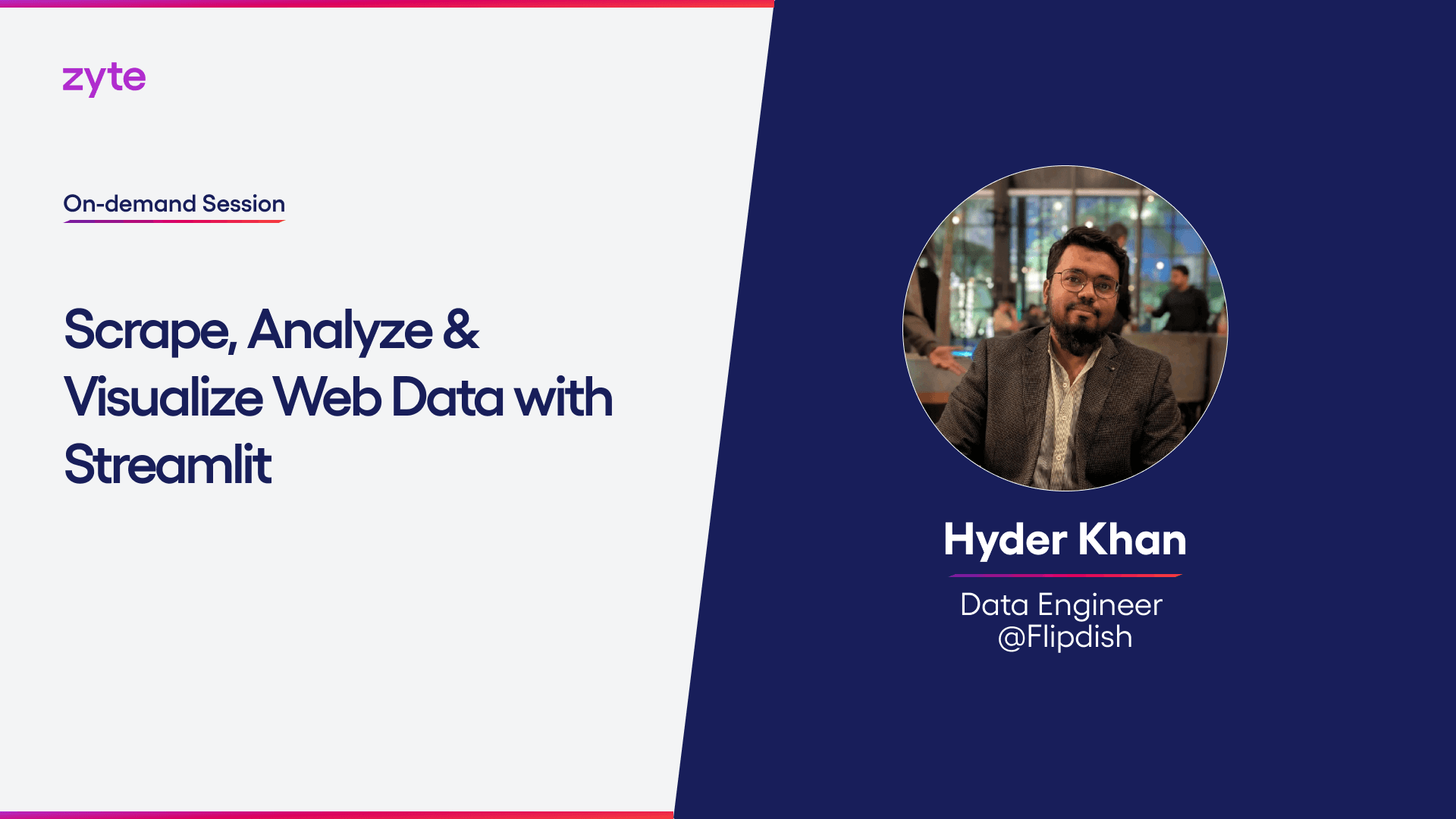 How To
Scrape, Analyze & Visualize Web Data with Streamlit
Join Hyder Khan | Data Engineer, @ Flipdish as he shares how to extract, clean, analyze, and visualize web data using a seamless workflow with Streamlit.
1 min read