Zyte Blog
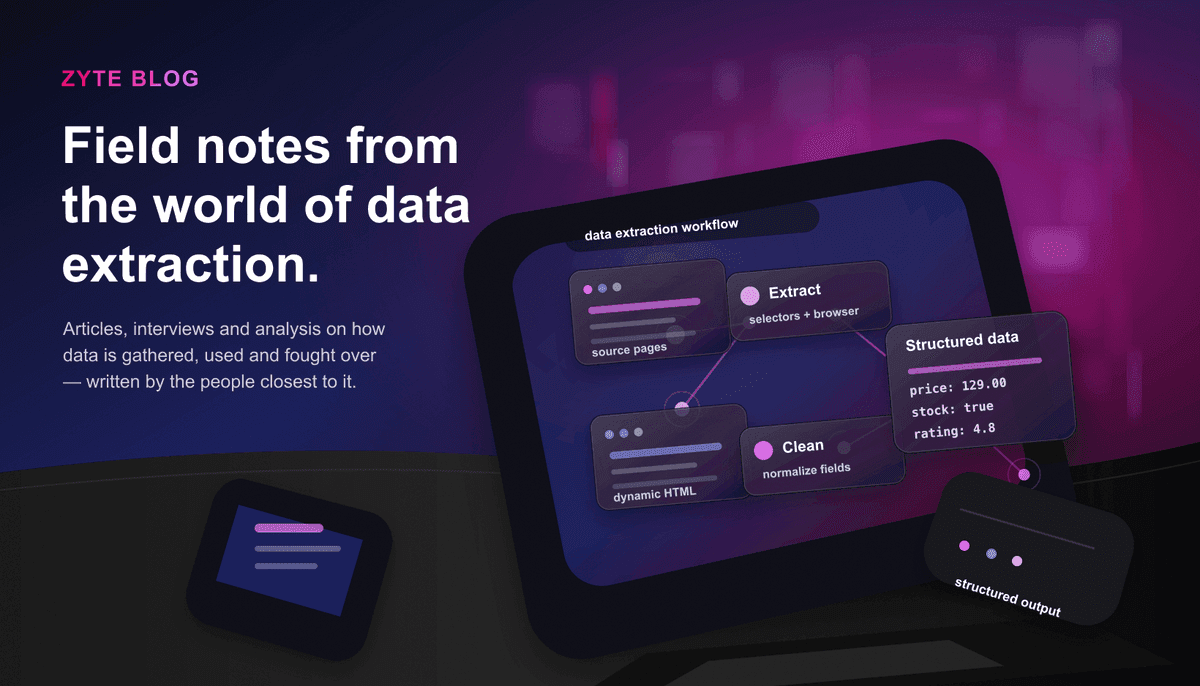
Field notes from the world of data extraction.
Articles, interviews and analysis on how data is gathered, used and fought over — written by the people closest to it.
Browse
Hot topics
Latest
What we've been publishing
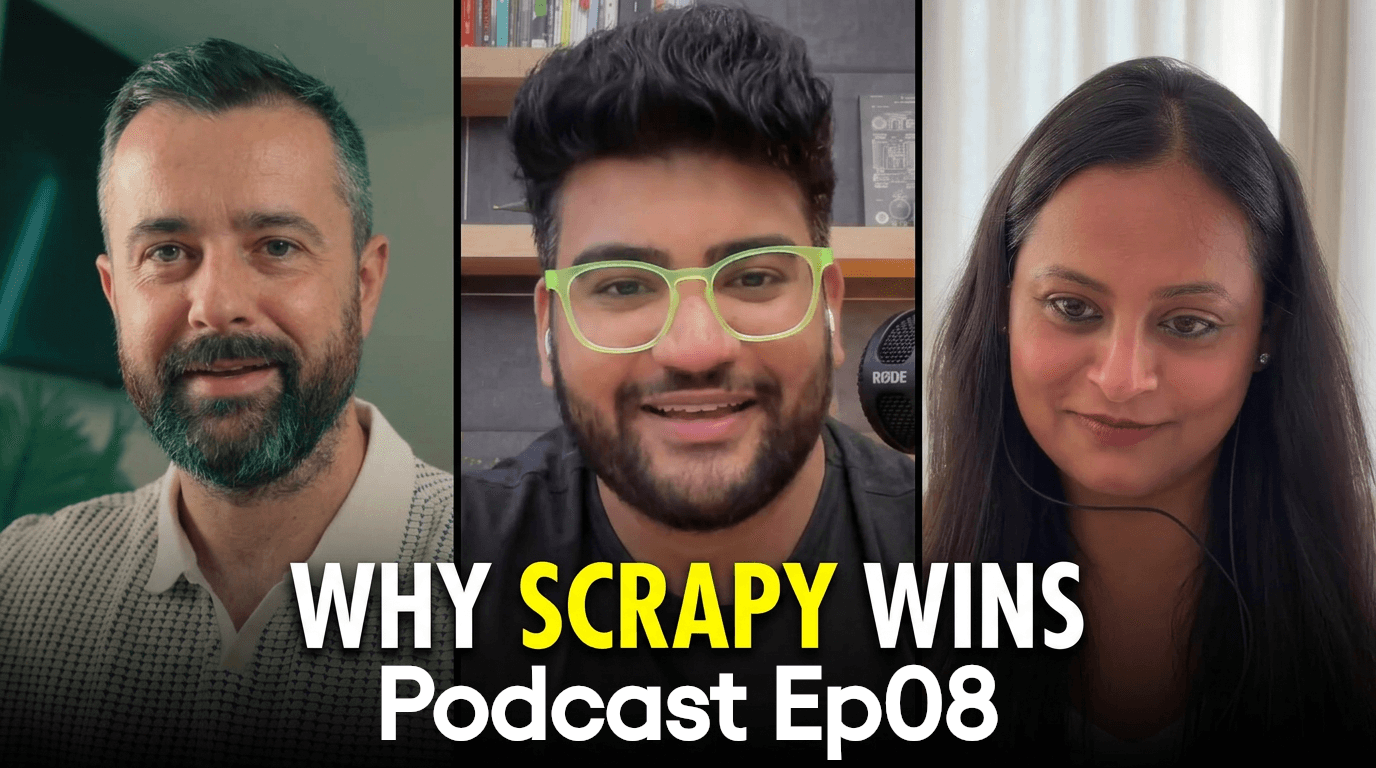
Podcast Ep08 - Scrapy, Python and mushroom soup
Scrapy's core handles crawling well and deliberately leaves almost everything else out: no bundled browser, no opinion about how you shape your data, no built-in answer for every anti-bot wrinkle. What it gives you instead is a clean way to add those things at the edges, exactly when you need them and never before.
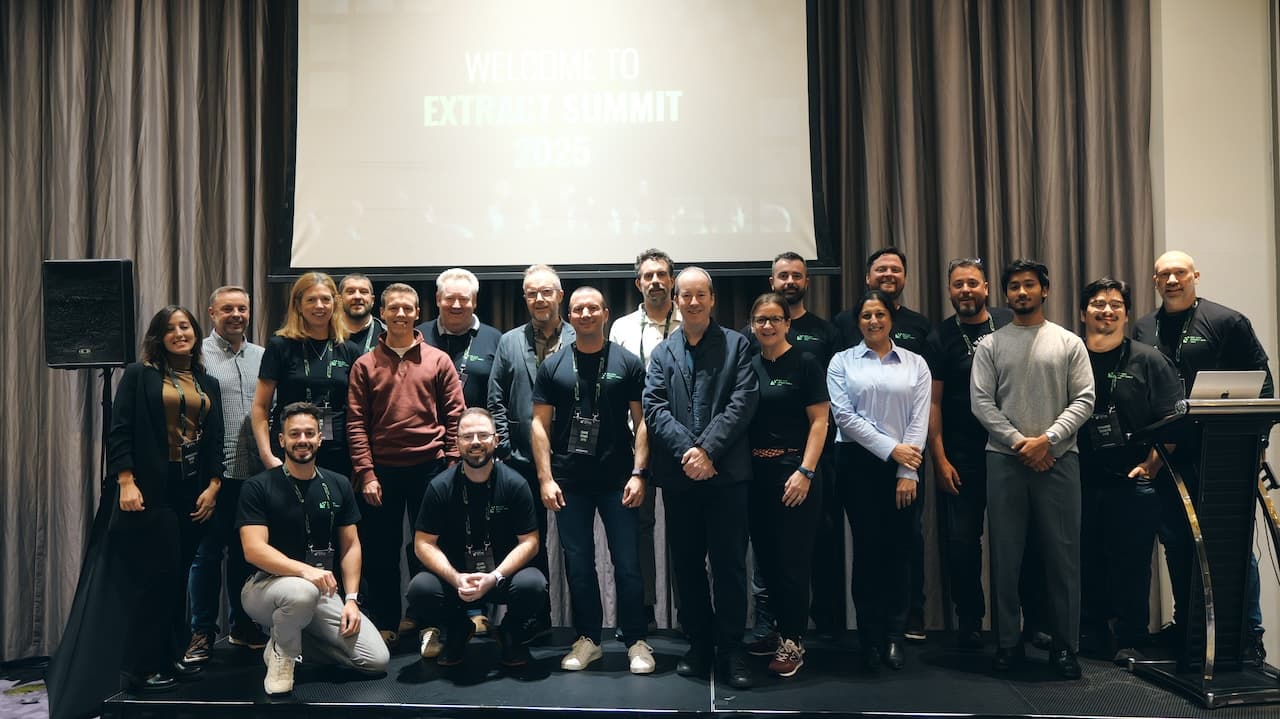
Five reasons to attend this year’s Extract Summit
In its eighth year, Extract Summit is again shaping up to be the web data industry's premier gathering.
The missing middle ground in scrapy-playwright just got filled
You can now choose which Python browser library you want to use with scrapy-playwright. I go through why this is a huge deal for the right scraping demographic.

Harness Engineering #3- Headless mode: the minimal agent harness
What's the smallest harness that still works? Turns out it's already sitting inside almost every coding agent you have installed — headless mode: same loop, tools, and reasoning as the interactive agent, minus the human in the chair. We point it at a web page and pull clean, structured data out the other end in about ten lines.

Claude Fable 5 is the new best model for writing scrapers
We ran nine models, including the new GPT-5.6, through our Zyte Scraping Code Benchmark. Claude Fable 5 puts Sol and others in the shade - but it’s pricey, and the best extraction code still depends on the best infrastructure.
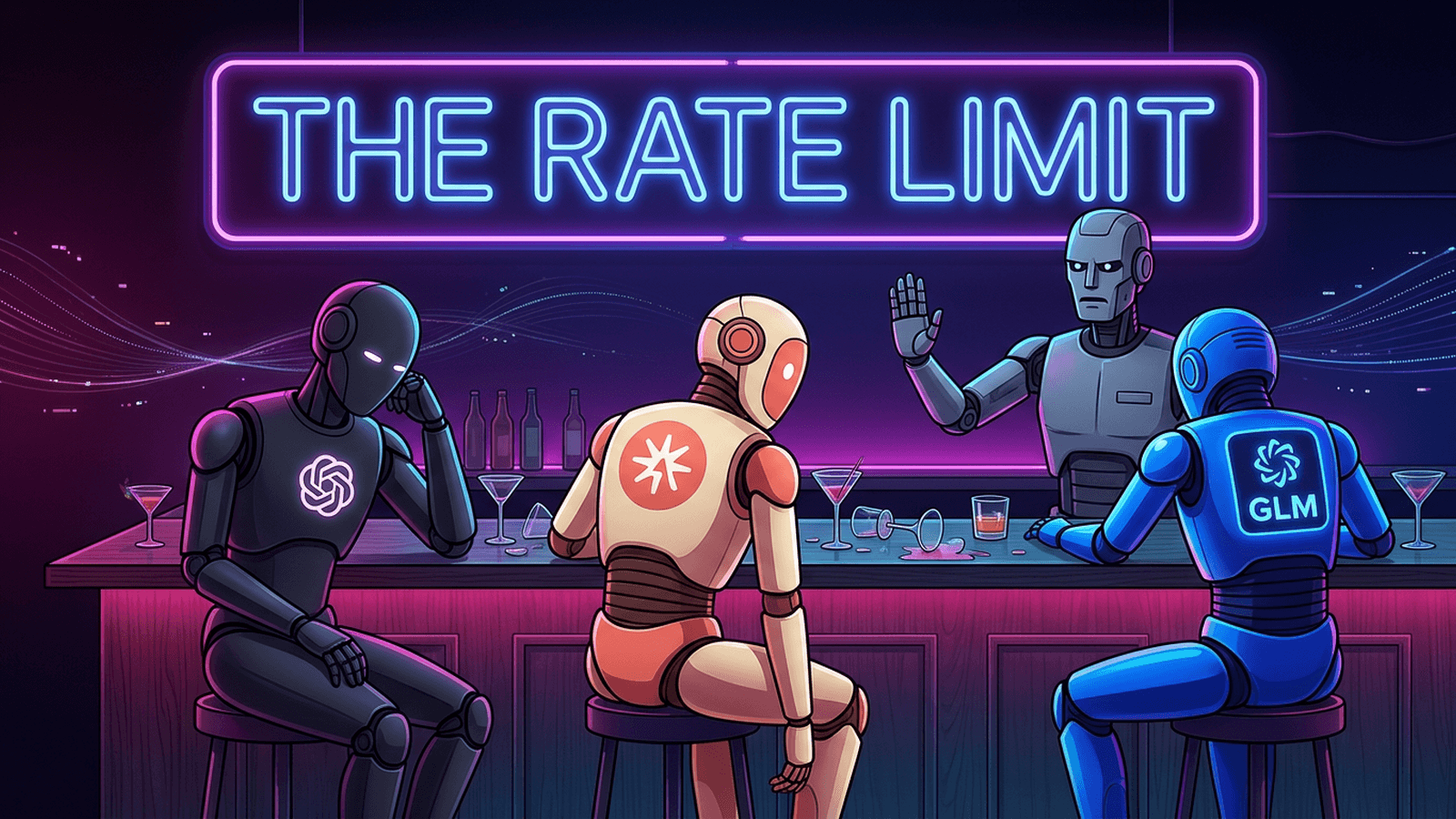
GPT-5.6, Fable 5, and GLM-5.2 entered a bar “crawl” and got hit by The Rate Limit
When OpenAI shipped GPT-5.6 and Anthropic's Fable 5 was sitting at the top of the price list, my question was not "which one wins a leaderboard." It was the one I actually pay for: for the scraping I do, how much model do I need to buy?
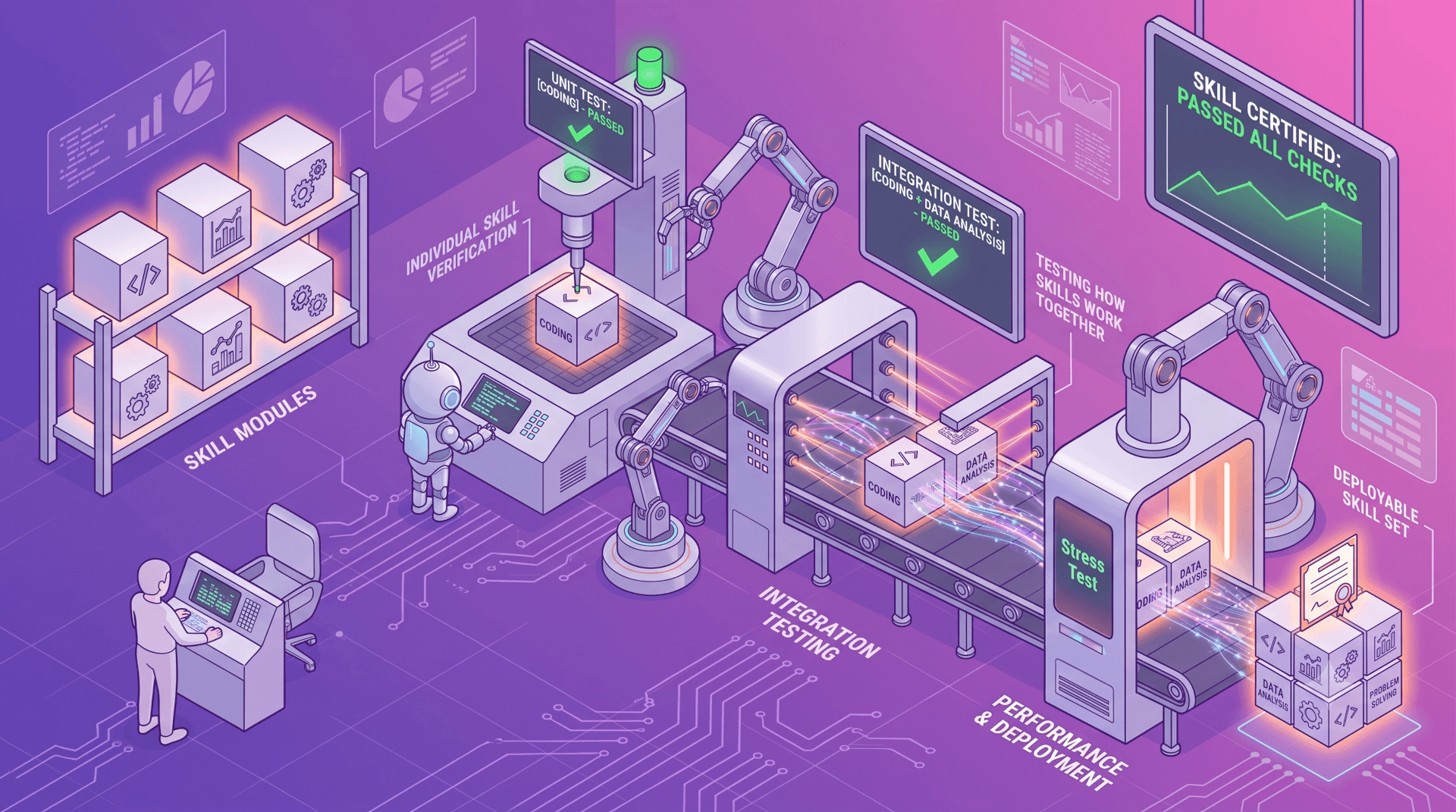
Treat your AI skills like software, starting with evals
Most AI skills are never tested — and it shows. Here's how Zyte evaluates scraping skills like real software, catching failures demos miss.
AI generated these Scrapy projects - why I won't ship them
What happens if you let AI create a Scrapy project from just a simple prompt? Here's what I got and what I had to fix.
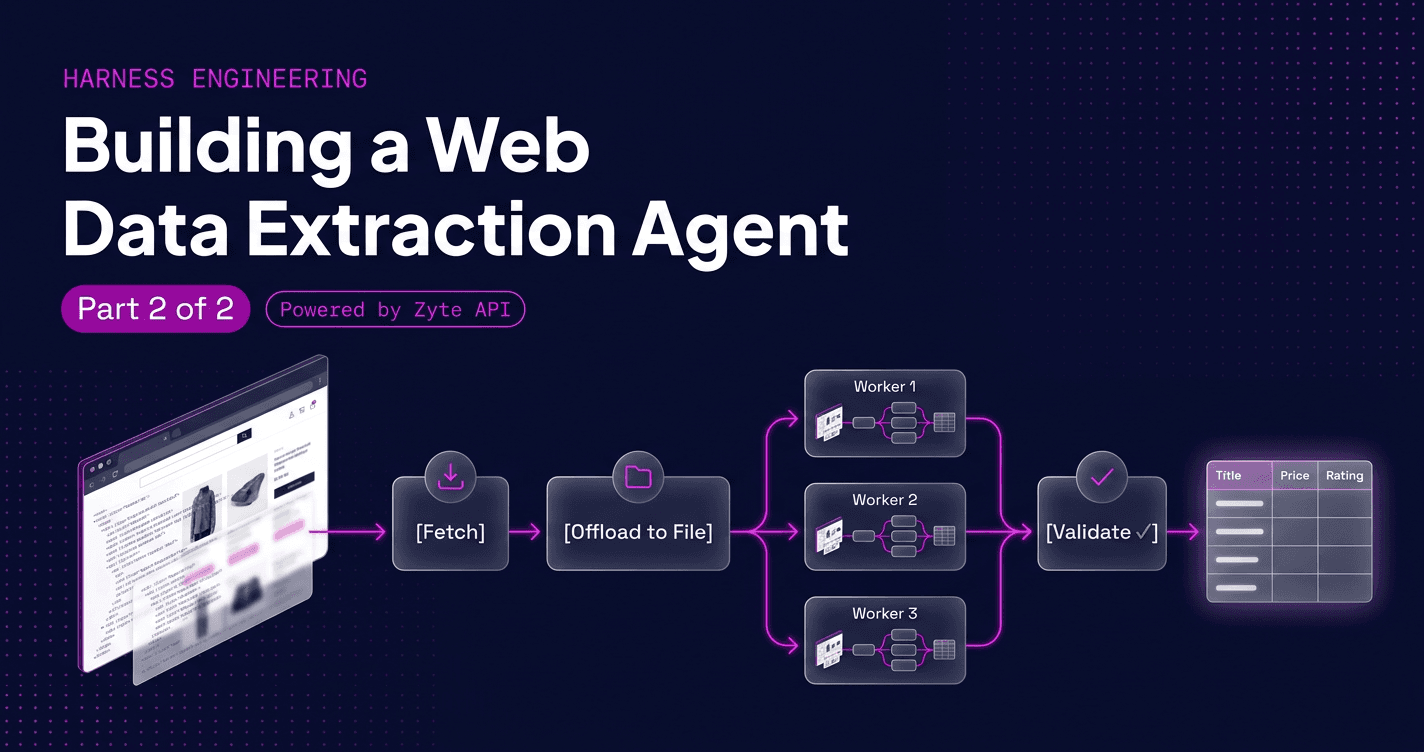
Harness Engineering, part 2: harnessing a data extraction agent
Point it at a website, tell it which fields you want, get back clean structured records. That's the agent we're designing in this post — and the interesting part isn't the model, it's the harness decisions that make it actually reliable at scale.
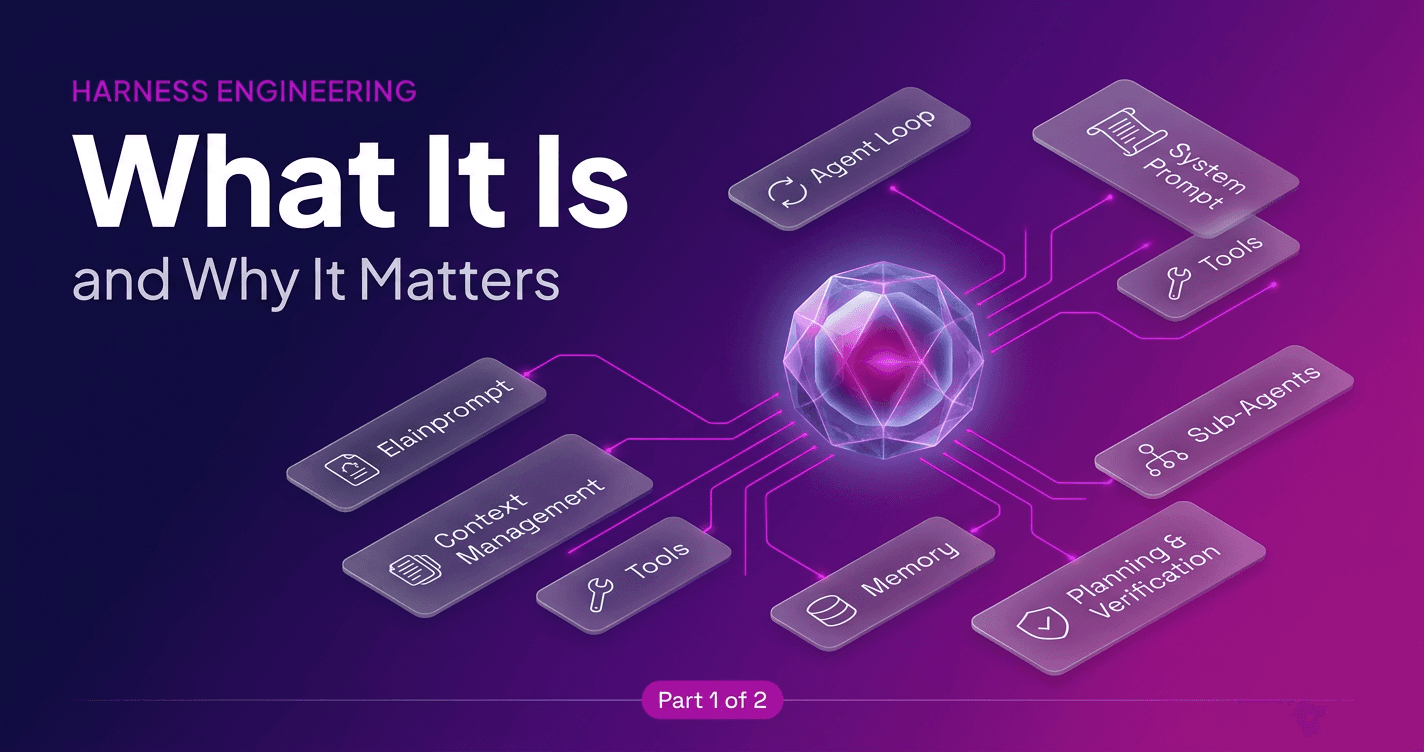
Harness Engineering, part 1: what is an agent harness and why it matters
Same model, same weights, zero retraining — LangChain changed nothing but the scaffolding around a coding model and jumped it from 30th place to the top five on a benchmark. That scaffolding has a name: the harness. And it's the part you actually control.

The harness matters more than the model - Podcast EP07
"The model is the engine — but the harness is everything else." In Episode 7, we dig into why the infrastructure layer around your AI model matters more than the model itself, rank the best models available right now, and ask whether the open-weighted revolution is about to make frontier subscriptions obsolete.
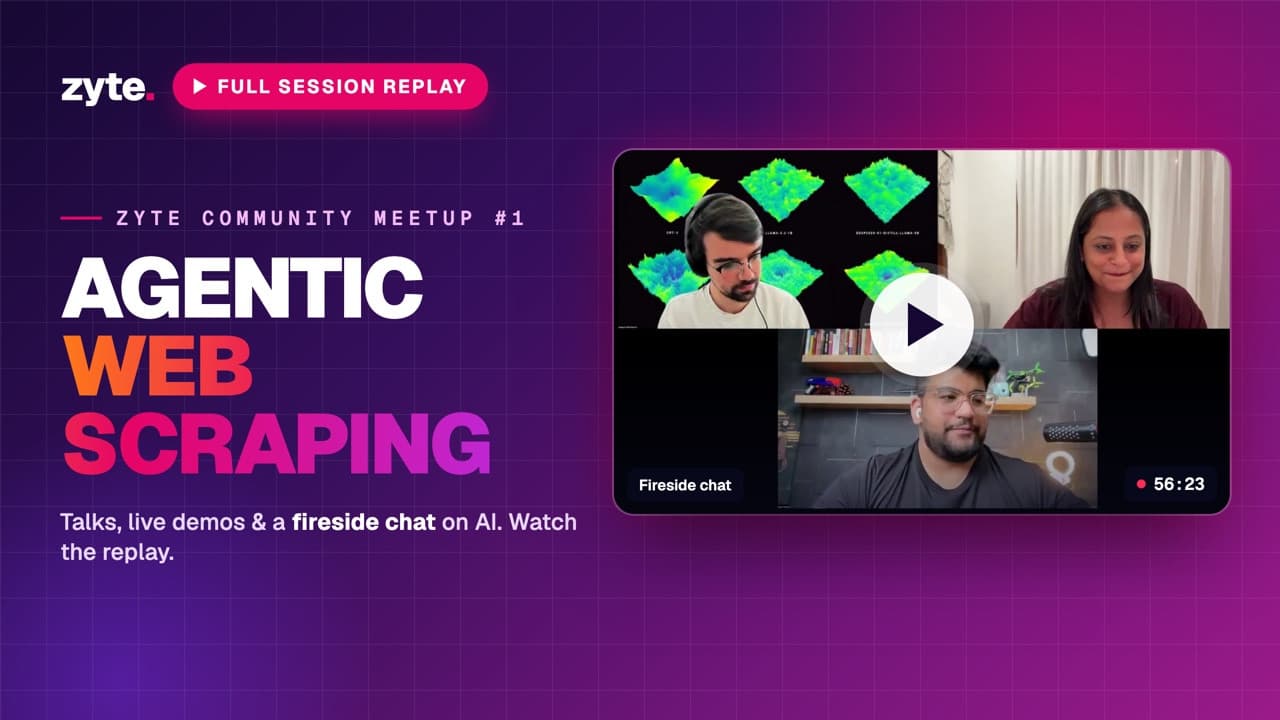
Zyte's first Developer Community Meetup: the recap, slides, and recording
AI agents can now write, run, and self-heal your web scrapers, and in Zyte's first-ever Web Scraping Community Meetup we show you exactly how. Live demos, a Claude Code plugin that turns a prompt into production-ready data, and a fireside chat on where AI is really heading.
 Bluesky
 X
X Mastodon
 LinkedIn
 Facebook
 dev.to
 RSS feed
Zyte YouTube
Watch & learn
Video · Zyte YouTube
AI generated these Scrapy projects - why I won't ship them
July 7, 2026

Video · Zyte YouTube
Screenshot webpages with this Claude Skill and Zyte API
March 6, 2026

Video · Zyte YouTube
0% Hallucination? RAG + Web Scraping (Step-by-Step)
March 5, 2026
Video · Zyte YouTube
Generate HTML Parsing code the right way with Scrapy & Web Scraping Copilot
February 23, 2026
Video · Zyte YouTube
Zyte API Sessions - flexible cookie management maintaining control
February 6, 2026
Events & community
Where Zyte shows up
 10–11 Nov 2026
Extract Summit 2026 — Dublin
In-person conference · Dublin, Ireland
 On demand
Extract Summit 2026 — Austin, TX
In-person conference · Austin, TX
Ship Agents That Survive the Real Web
Webinar · Zoom, with Humanbound
 On demand
2026 Web Scraping Industry Report by Zyte
Webinar · On demand