PINGDOM_CHECK

#ExtractSummit2026 The world's largest web scraping conference returns. Austin Oct 7–8 · Dublin Nov 10–11.

Register now
Data Services
Pricing
Login
Try Zyte APIContact Sales
  • Unblocking and Extraction

    Zyte API

    The ultimate API for web scraping. Avoid website bans and access a headless browser or AI Parsing

    Ban Handling

    Headless Browser

    AI Extraction

    SERP

    Enterprise

    DocumentationSupport

    Hosting and Deployment

    Scrapy Cloud

    Run, monitor, and control your Scrapy spiders however you want to.

    Coding Agent Add-Ons

    Agentic Web Data

    Plugins that give coding agents the context to build production Scrapy projects. Starts with Claude Code.

  • Data Services
  • Pricing
  • Browse

    • BlogArticles, podcasts, videos
    • Case studiesCustomer outcomes
    • White papersIn-depth reports
    • EventsConferences, webinars, recordings

    Subscribe

    • NewsletterSwiftly delivered
    • Discord communityExtract Data community
  • Product and E-commerce

    From e-commerce and online marketplaces

    Data for AI

    Collect and structure web data to feed AI

    Job Posting

    From job boards and recruitment websites

    Real Estate

    From Listings portals and specialist websites

    News and Article

    From online publishers and news websites

    Search

    Search engine results page data (SERP)

    Social Media

    From social media platforms online

  • Meet Zyte

    Our story, people and values

    Contact us

    Get in touch

    Support

    Knowledge base and raise support tickets

    Terms and Policies

    Accept our terms and policies

    Open Source

    Our open source projects and contributions

    Web Data Compliance

    Guidelines and resources for compliant web data collection

    Join the team building the future of web data
    We're Hiring
    Trust Center
    Security, compliance & certifications
Login
Try Zyte APIContact Sales

Zyte Developers

Coding tools & hacks straight to your inbox

Become part of the community and receive a bi-weekly dosage of all things code.

Join us
    • Zyte Data
    • News & Articles
    • Search
    • Social Media
    • Product
    • Data for AI
    • Job Posting
    • Real Estate
    • Zyte API - Ban Handling
    • Zyte API - Headless Browser
    • Zyte API - AI Extraction
    • Web Scraping Copilot
    • Zyte API Enterprise
    • Scrapy Cloud
    • Solution Overview
    • Blog
    • Webinars
    • Case Studies
    • White Papers
    • Documentation
    • Web Scraping Maturity Self-Assesment
    • Web Data compliance
    • Meet Zyte
    • Jobs
    • Terms and Policies
    • Trust Center
    • Support
    • Contact us
    • Pricing
    • Do not sell
    • Cookie settings
    • Sign up
    • Talk to us
    • Cost estimator
All articles
AI60, 60 articles
Data quality13, 13 articles
Developer interest57, 57 articles
Integration2, 2 articles
Open-source40, 40 articles
Proxies29, 29 articles
Scraping practice17, 17 articles
Scraping strategy26, 26 articles
Web data60, 60 articles
Web scraping APIs33, 33 articles
Zyte API59, 59 articles
Scrapy48, 48 articles
Scrapy Cloud10, 10 articles
Web Scraping Copilot12, 12 articles
AI & Machine Learning1, 1 articles
Automotive2, 2 articles
E-commerce & retail26, 26 articles
Entertainment & Streaming2, 2 articles
Financial Services8, 8 articles
Government2, 2 articles
Market Research & Intelligence3, 3 articles
Media & publishing8, 8 articles
Real Estate2, 2 articles
Recruitment & HR3, 3 articles
Transportation & Logistics2, 2 articles
Travel & hospitality2, 2 articles
Extract Summit25, 25 articles
PyCon1, 1 articles

Appearance

Discord Community
BlogProxiesBackconnect proxies explained: How to use them in a scraping project?
ArticleTutorial / How-toProxies

Backconnect proxies explained: How to use them in a scraping project?

Scaling up your web scraping project without a reliable backconnect rotating proxy service is difficult. Learn how a backconnect proxy works and when to use it.

A

Attila Toth

4 min read · December 10, 2019

Backconnect proxies explained: How to use them in a scraping project?

Why are backconnect proxies important for scraping?

Scaling up your web scraping project is not an easy task.

Adding proxies is one of the first actions you will need to take. You will need to manage a healthy proxy pool to avoid bans.

There are a lot of proxy services/providers, each having a whole host of different types of proxies.

In this blog post, you are going to learn how backconnect proxies work and when you should use them.

The web scraping proxy landscape

Before we get into the details of backconnect proxies it’s important to understand the different types of proxies. Here’s a summary:

IP address

So, first of all, we can refer to proxies based on the IP address type:

  • Datacenter
  • Residential
  • Mobile

A backconnect proxy network can be a set of any of these or even a combination of these.

Knowing what kind of address you need for your web scraping project is important. You can read more about IP address types in our web scraping proxy guide.

Proxy quality

We can also group proxies together based on their quality:

  • Public/open: free proxies
  • Shared: multiple users use the same proxy, shared resources
  • Dedicated: only accessible to you

Public proxies are free and can be used by anyone. Hence, the quality is poor and you probably can’t use them to scale your web scraping. Dedicated proxies are the best for web scraping. Only you can access them and you have all the control over them.

Proxy management

Finally, we can define proxies based on if they are managed proxies or not:

  • Regular proxy: a single proxy that you can use to access a website, not managed
  • Backconnect proxy: a managed proxy network (or pool) with features helping you scrape websites

Now let’s see the difference between these two types.

How regular proxies work

The way a regular proxy server works is pretty simple. You send your request through one proxy and hope that you will get a successful response back. If the IP address is banned you will need to try it with another proxy. Here’s an illustration:
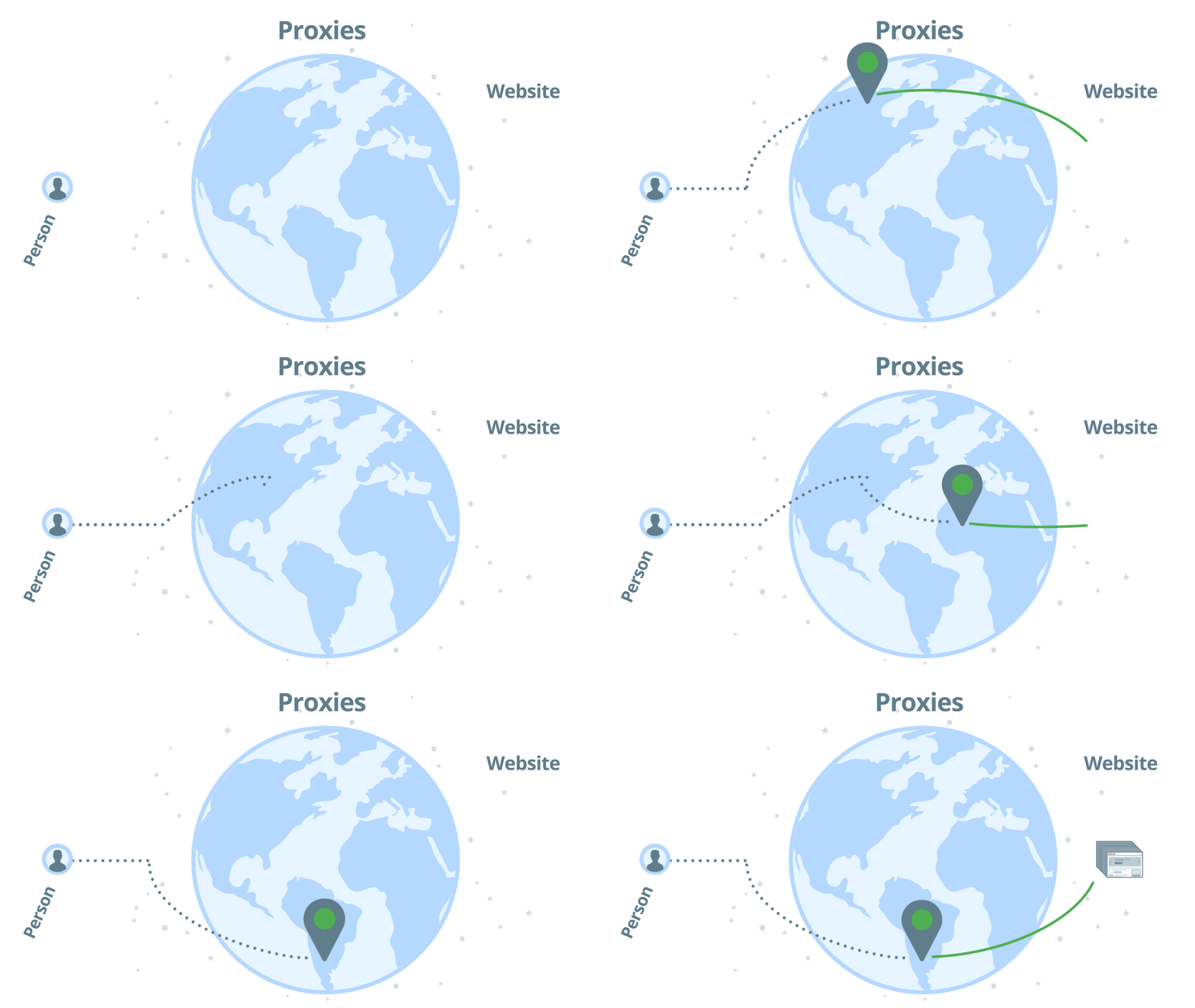
Using regular proxies is not a scalable solution unless you implement your proxy management solution. Main challenges of proxy management: identify bans, rotate proxies, user agent management, add delays, and geo-targeting.

How backconnect proxies work

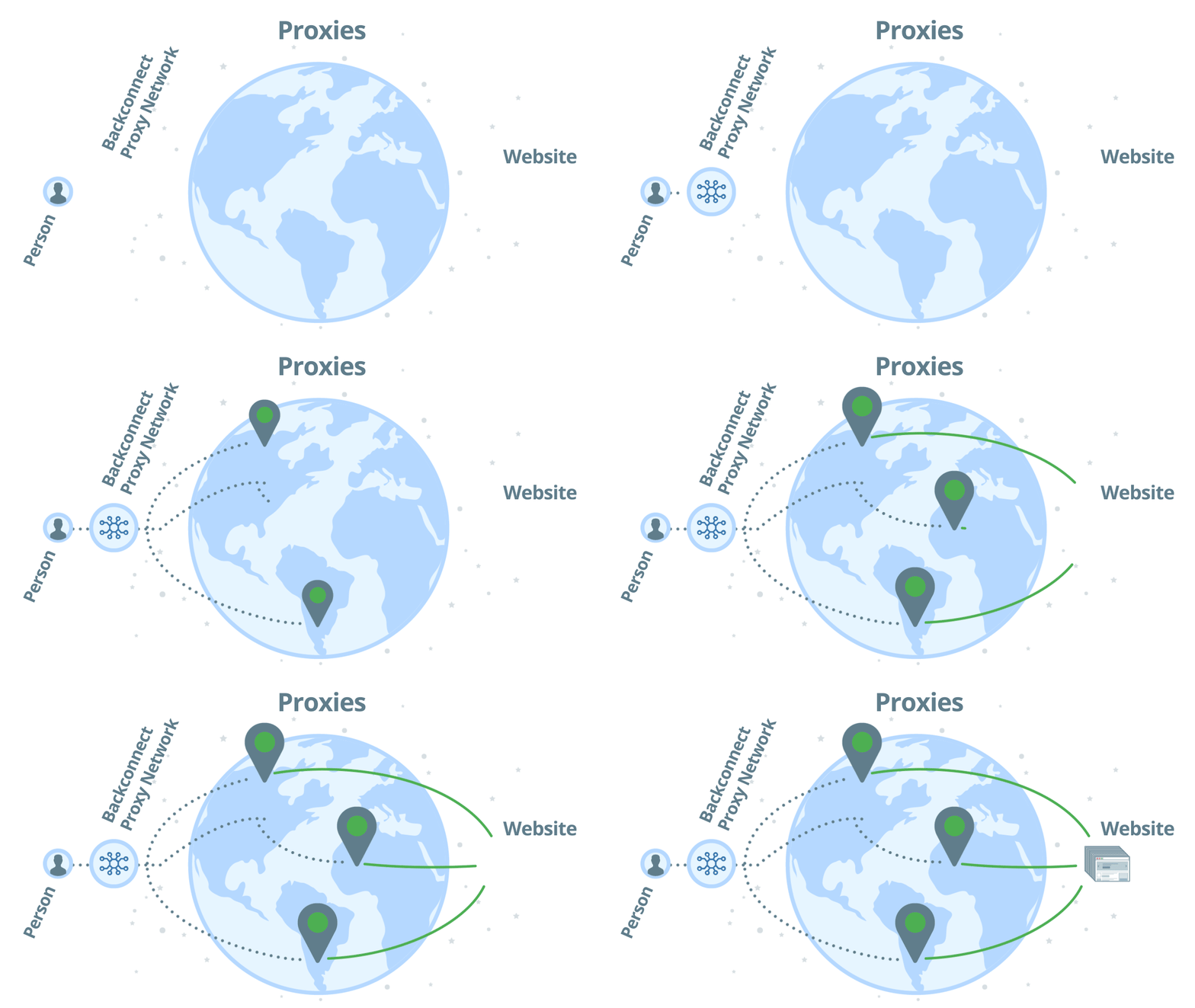
Backconnect proxies are an easy way to handle multiple requests. You can think of it as a pool of IP addresses, from the list above, plus proxy management. Unlike regular proxies where you need to send your requests through different proxies manually, with backconnect proxies you need to send all your requests through one proxy network only. Which then assigns a working IP address for you. If it gets banned you automatically get another IP address, then another, and so on. As a user, it’s hassle-free.

If you use a backconnect proxy for scraping, you don’t directly access proxies one by one. Instead, you access a pool of proxies and you will instantly get a proxy that can reach the target website with relative ease. As an example, let’s see how Zyte API's backconnect rotating proxies work:
backconnect proxy

Using backconnect proxies with automatic ban detection, you can scale up your web scraping projects to millions of requests per day. As you don’t directly access the proxies, but through a network, your original IP address will be untraceable.

Features to look for when choosing a backconnect proxy provider:

  • Geographically distributed
  • Intelligent netloc specific proxy rotation logic
  • Browser profile management
  • Throttling algorithms
  • Built-In session management

Be respectful

It’s also important to be respectful when crawling websites. This means, do not harm the website by sending too many requests. If necessary, limit the number of concurrent requests or wait between requests. Read our web scraping best practices guide for more information.

Why would you choose Zyte API as your backconnect rotating proxy solution?

Performance

Having a quality proxy pool at your fingertips is already a huge advantage over regular proxies but our managed backconnect rotating proxy network has much more features to combat blocks. Features like automatic proxy rotation, geolocation, custom user agents, configurable browser profiles, and cookies. With these, you will be able to achieve your desired requests per minute (RPM) or throughput with a minimum of fuss.

Cost

Zyte API's quality proxy pool combined with intelligent proxy rotation and automatic ban avoidance capabilities allows you to leverage datacenter proxies to the greatest possible degree. Using backconnect residential proxies optimally, therefore keeping the costs down.

Learn more about Zyte web scraping API and what it's capable of.
Try Zyte API

Build your first scraper in minutes

Free trial, no credit card. From a single request to production in an afternoon.

Get started
Proxies
A

Attila Toth

More from this author

In this article

  • Why are backconnect proxies important for scraping?
  • The web scraping proxy landscape
  • IP address
  • Proxy quality
  • Proxy management
  • How regular proxies work
  • How backconnect proxies work
  • Be respectful
  • Why would you choose Zyte API as your backconnect rotating proxy solution?
  • Performance
  • Cost

Follow

Get the latest

Zyte and the data web in your inbox — or wherever you already are.

Subscribe

Or follow elsewhere

The Community · Newsletter

The best of Zyte and the data web, in your inbox.

One curated edition — new articles, product updates, and the stories shaping the data web. No noise.

G2.com

Capterra.com

Proxyway.com

EWDCI logoMost loved workplace certificateZyte rewardISO 27001 iconG2 rewardG2 rewardG2 reward

© Zyte Group Limited 2026