Python
Articles from the Zyte blog in Python.
How to ensure data quality in your Scrapy web scraping projects using Spidermon and Claude Code
Spidermon is an open-source monitoring framework for Scrapy. You attach it to your spider, define what "success" looks like, and it automatically checks your crawl results after the spider closes, flagging anything that doesn't meet your standards.
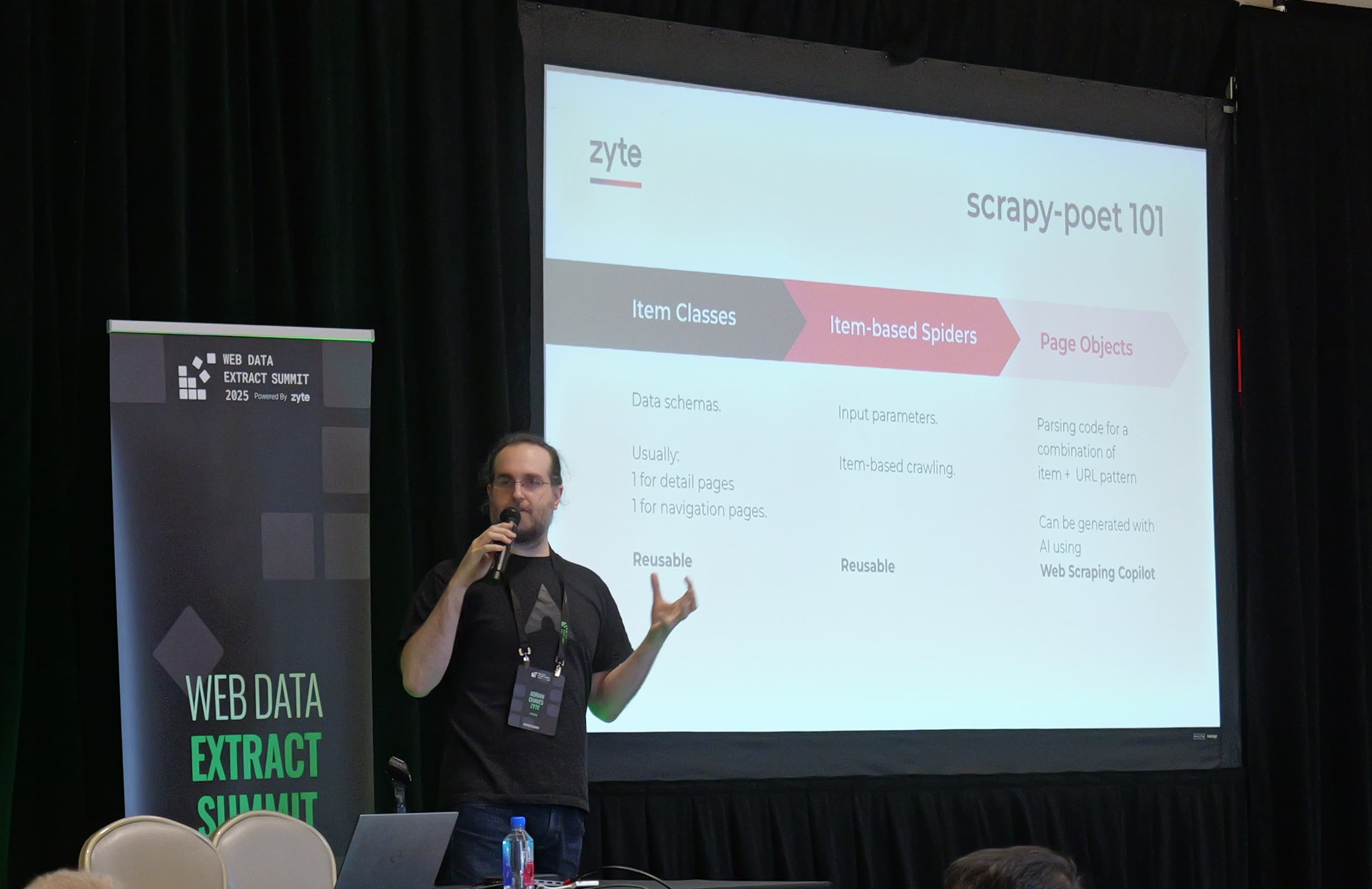
The Scrapy whisperer: Adrian Chaves on Web Scraping Copilot
An interview with Scrapy maintainer Adrian Chaves on Zyte’s Web Scraping Copilot, AI-generated parsing code, and building reliable scraping workflows.
How to parse HTML tables into structured data (CSV/Excel)
In this guide, you'll learn three things: how HTML tables are actually structured (so the parsing makes sense), how to extract clean tabular data using Python, and how to export it to CSV or Excel
Stop using Python requests for web scraping: Use these modern modules instead
While the 'Requests' library remains the default choice for many Python developers due to its reliability and extensive documentation, the Python HTTP landscape has evolved considerably. Modern alternatives now offer significant advantages, including built-in asynchronous support, HTTP/2 compatibility, enhanced performance, and up-to-date TLS handling.
Why Python Requests gets "403 Forbidden"
If you’ve had your HTTP request blocked regardless of using correct headers, cookies, and good IPs, there’s a chance you are running into one of the simplest forms of blocking, and one of the most confusing for beginners.
Building a production-style web scraper with Scrapy, Docker, and PostgreSQL
Demo project scrape2postgresql shows how to scrape structured data with Scrapy, store it in PostgreSQL, and run both the spider and database in separate containers using Docker Compose.

Scraping Swiss Army Knife: My personal fix for web setup fatigue using Docker, Scrapy and Zyte
Tired of repeating web scraping setup? Learn how a multi-arch Docker container with Scrapy, Zyte, Requests, and Pandas speeds up exploration and debugging.
How I trade gold using e-ink, live data and an old Raspberry Pi
Track real-world gold and silver retail prices automatically using Zyte API, Python, and a Raspberry Pi with an e-ink display. Learn how to scrape rendered HTML, parse prices, and build an always-on trading dashboard.
Scrapy in 2026: New release brings modern async crawling standards
Scrapy 2.14.0 modernizes the framework with native async/await, smarter scheduling, and cleaner spider configuration. Here’s what the new release means for production crawlers in 2026.
The Modern Scrapy Developer's Guide (Part 3): Auto-Generating Page Objects with the Web Scraping Copilot
In this guide, we'll show you how to use Web Scraping Copilot (our VS Code extension) to automatically write 100% of your Items, Page Objects, and even your unit tests.
The Modern Scrapy Developer's Guide (Part 2): Page Objects with scrapy-poet
In this guide, we'll fix this by refactoring our spider to a professional, modern standard using Scrapy Items and Page Objects (via crapy-poet). We will completely separate our crawling logic from our parsing logic.
The Modern Scrapy Developer's Guide (Part 1): Building Your First Spider
In this definitive guide, we will walk you through, step-by-step, how to build a real, multi-page crawling spider. You will go from an empty folder to a clean JSON file of structured data in about 15 minutes