Web scraping vs web crawling | Zyte
Colm Kenny
3 min read ·
Web crawling vs web scraping
People talk sometimes interchangeably about these two. But, actually, there's a difference. Want to know what is the difference between web scraping and web crawling? You're in the right place.
The short answer
The short answer is that web scraping is about extracting data from one or more websites. While crawling is about finding or discovering URLs or links on the web.
Usually, in web data extraction projects, you need to combine crawling and scraping. So you first crawl - or discover - the URLs, download the HTML files, and then scrape the data from those files. This means you extract data and do something with it, like storing it in a database or further processing it.
What's different?
Going deeper, there's a big difference in the purpose of these two things and how they work.
Web scraping is all about the data - the data fields you want to extract from specific websites. With scraping you usually know the target websites, you may not know the specific page URLs, but you know the domains at least.
With crawling, you probably don't know the specific URLs and you probably don't know the domains either. And this is the reason you crawl: you want to find the URLs. So that you can do something with them later. For example, search engines crawl the web so they can index pages and display them in the search results.
But another data crawling example would be when you have one website that you want to extract data from - in this case you know the domain - but you don't have the page URLs of that specific website. You don't know what pages to scrape. So first you create a crawler that will output all the page URLs that you care about - it can be pages in a specific category on the site or in specific parts of the website. Or maybe the URL needs to contain some kind of keyword for example and you collect all those URLs - and then you create a scraper that extracts predefined data fields from those pages.
What is the end result?
With web crawling the output is a lot more simple because it's just a list of URLs — you can have other fields as well but the main elements are the URLs.
And with web scraping, you usually have a lot more fields - 5-10-20 or more data fields. The URL can be one, but when you scrape, you extract the data not necessarily for the URL but for other data fields that are displayed on the website. Depending on the business use case, these can be product name or product price, or some text or other information from any type of website.
Get web data directly
For businesses, it makes sense to not worry about crawling and scraping so you can focus purely on the insights from that data. Web data partners like Zyte can take care of all the hassles of web scraping. Just tell us what data you need.
Learn more about web scraping
Here at Zyte , we have been in the web scraping industry for 12 years. We have helped extract web data for more than 1,000 clients ranging from Government Agencies and Fortune 100 companies to early-stage startups and individuals. During this time we gained a tremendous amount of experience and expertise in web data extraction.
Here are some of our best resources if you want to deepen your web scraping knowledge:
- Web scraping: Best practices
- Enterprise web scraping: A guide to scraping at scale
- Legal compliance in web scraping
- The build in-house or outsource decision
- Price intelligence: Everything you need to know about price crawling
- Price intelligence Data knowledge hub
FAQs
What is web scraping?
Web scraping is the process of extracting specific data fields from websites, such as product names or prices.
What is web crawling?
Web crawling involves discovering or finding URLs on the web, often used to create a list of pages to scrape later.
How are web crawling and web scraping different?
Web crawling focuses on discovering URLs, while web scraping focuses on extracting data from known or discovered pages.
Can web crawling and scraping be combined?
Yes, web crawling is often used to first find URLs, and then web scraping is applied to extract data from those pages.
What kind of data is extracted in web scraping?
Web scraping typically extracts multiple data fields such as product names, prices, or text from websites.
More learn articles
Keep learning
 Use case
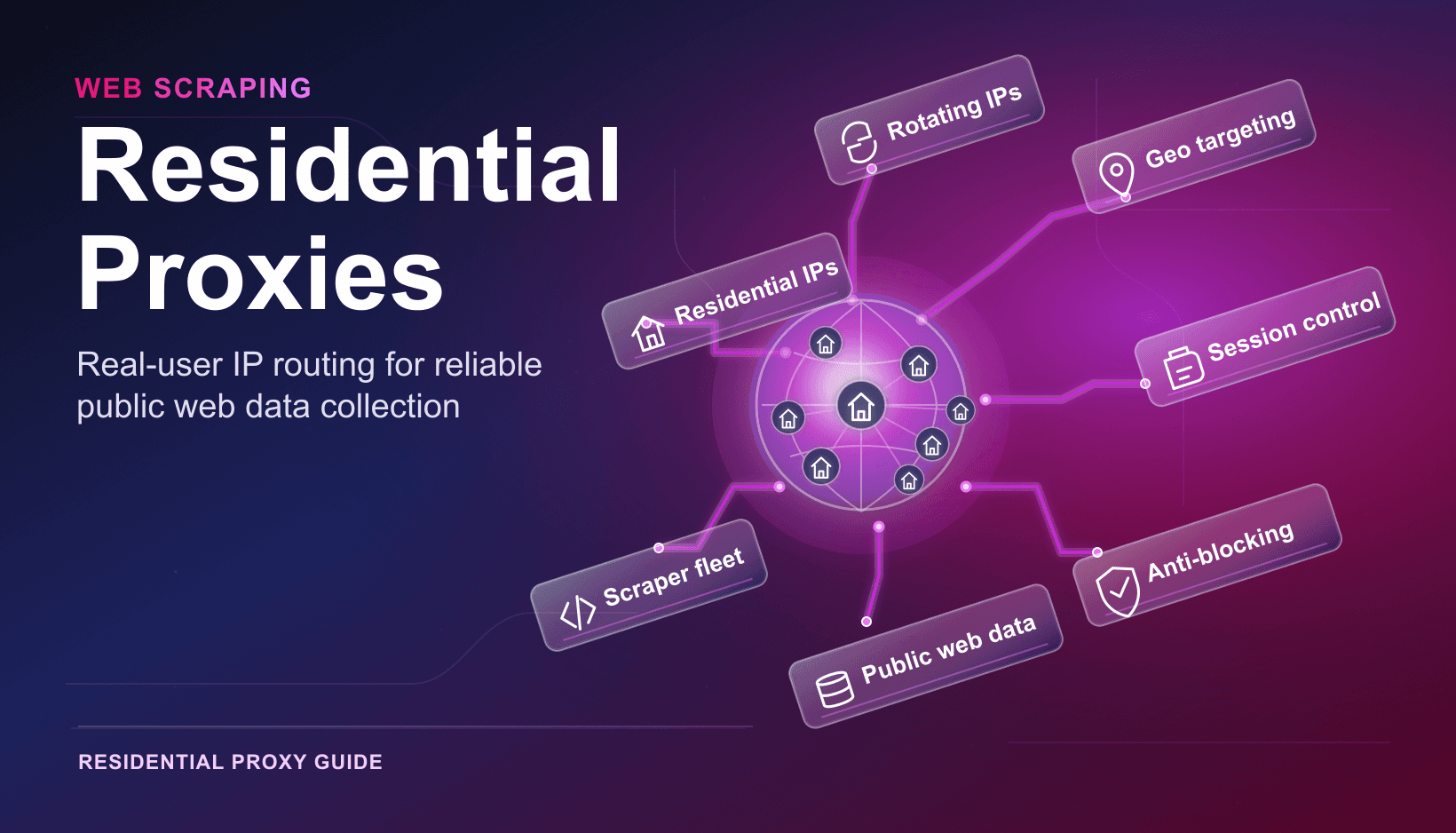
What is a residential proxy?
Learn what residential proxies are, how they compare to datacenter proxies, and why modern web scraping needs more than IP diversity.
10 min read
 Use case
How much do rotating proxies cost?
Learn how much rotating proxies cost, what affects pricing, and why total web scraping costs often go beyond proxy subscriptions.
10 min read
Use caseHow do rotating proxies work?
Learn how rotating proxies work, when to use them for web scraping, and why IP rotation alone is not enough for reliable data access.
10 min read