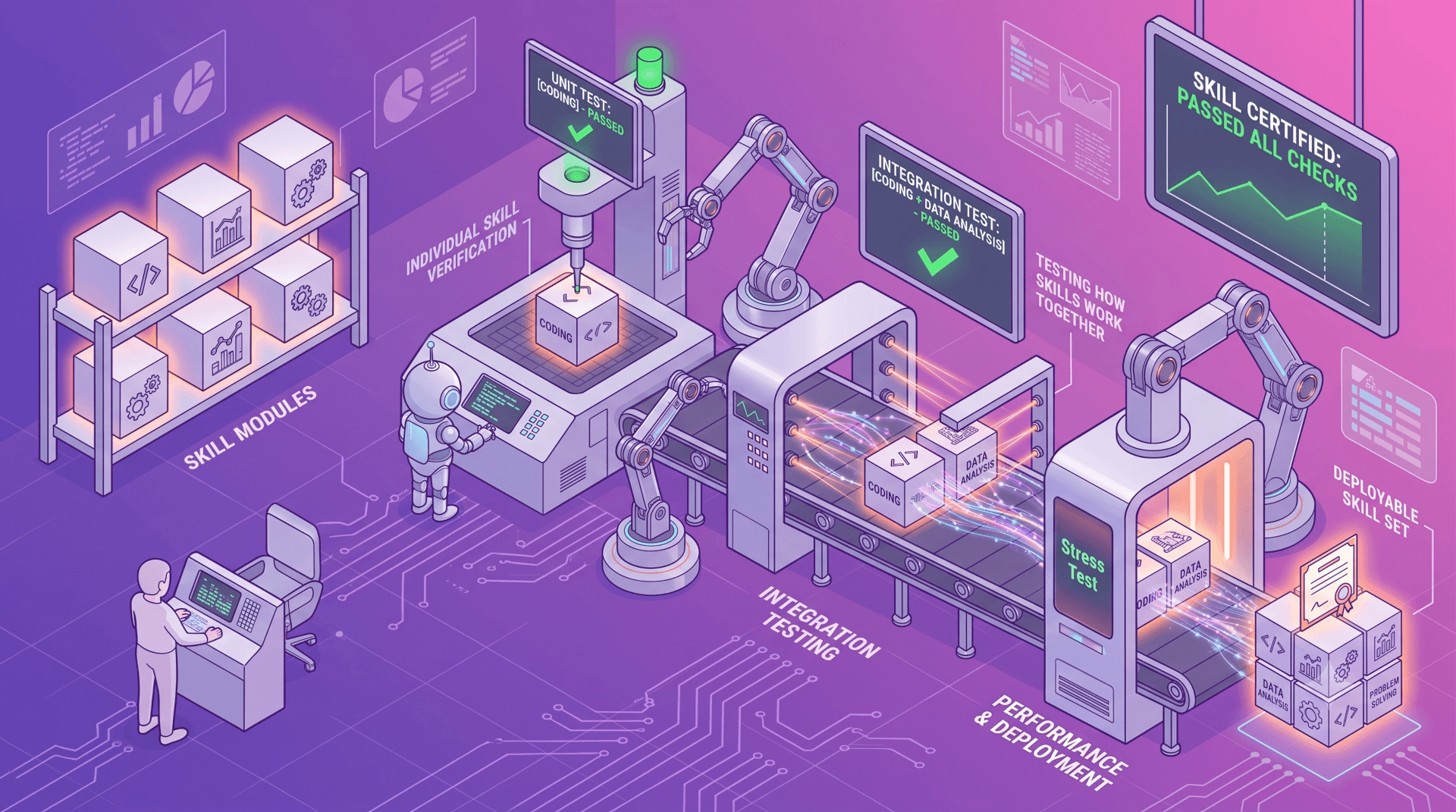
The global web scraping market is projected to more than double, from $1.03 billion in 2025 to $2.23 billion by 2026, according to Mordor Intelligence, with Asia-Pacific driving much of that growth.
Businesses across Asia are increasingly tapping into web data:
- Manufacturers are using customs and shipping feeds to calibrate global pricing, IT firms are building large-scale data extraction into their outsourcing contracts.
- In south-east Asia, logistics, travel, and fintech apps fight real-time pricing wars using competitor data streams.
- Then there is the sheer scale of Asian e-commerce. Both domestic sellers and international brands require constant data from the region's dominant shopping platforms, which function very differently from their western counterparts.
For data professionals - not only those in the region but across the globe - the need for this data is clear.
But accessing this market is more difficult than it seems as Asia's approach and dedication to scraping mitigation is distinct and aggressive.
Organizations that navigate this landscape effectively gain a competitive advantage - but only by understanding what makes the region distinct.
The global arms race
Web scraping has always been a game of technological cat and mouse. Platforms are getting better at detecting bots, and a baseline of web access friction - from rate limiting, IP blocking, JavaScript rendering, to CAPTCHAs - is now deployed globally.
However, this shared technological foundation is where the similarities end. In Asia, these tools are deployed with a different intensity and approach.
Sites in the region are more likely to employ location-aware and account-specific personalization, alongside a heavier investment in custom-built proprietary systems over third-party solutions.
Access Asia
In practice, this different approach creates several formidable barriers for web scrapers, each demanding a unique solution.
The login wall

For Asia's largest e-commerce platforms, login walls are a business-model necessity - and the primary defense against data extraction.
This is driven by the region's hyper-competitive retail media market and the rise of the "super-app”.
To monetize their traffic effectively, these platforms need continuous, first-party behavioral data to power AI-driven personalization, targeted advertising for merchants, and integrated services like digital wallets and live streaming.
By tying every activity to an account, the platforms gain the ability to offer personalization, while also making it trivial to spot scrapers. Some of the largest south-east Asian marketplaces block all unauthenticated access to most of their web platforms.
Some major Chinese B2C platforms keep category pages public for search engines and new users, but lock down product detail pages behind a login.
But our team found that these login walls bark louder than they bite. Some login walls from some sites can be managed through careful curation of a valid pool of fresh sessions, without ever crossing the boundary of the site’s terms of services.
This transforms the challenge into one of managing a scalable scraping infrastructure to enable abundant healthy sessions.
The CAPTCHA gauntlet

While novel CAPTCHAs like sliders, puzzle pieces, and behavioral analysis are increasingly emerging from research into production in the west, vendors serving Asian e-commerce platforms have been developing and deploying advanced behavioral authentication for over a decade.
This investment was driven by necessity as the region faces high rates of cybercrime and account takeover attempts. For instance, LexisNexis reported that cybercrime attack rates in Asia-Pacific rose 12% year on year.
The Chinese vendor GeeTest, which ranks as the third most popular CAPTCHA provider globally according to our research, pioneered behavior-based authentication in 2012. Notably, in 2022, it deployed fourth-generation "Adaptive CAPTCHAs".
But GeeTest is just one example of the diverse and evolving challenges our team analyzes daily.
We see Chinese platforms use slider verification that analyzes your mouse movements, looking for the subtle hesitations and curves of a human hand.
South Korean sites employ quiz challenges with rotating puzzles that can confound even human users, let alone automated flow. One researcher in our access management team, for instance, documented a quiz-based CAPTCHA that required parsing a utility bill image to answer a question about its contents.
For data-dependent companies, successfully navigating this gauntlet requires a partner with dedicated research teams constantly analyzing these evolving mechanisms, and an infrastructure capable of deploying real-time counter-measures to maintain reliable access.
The app-centric ecosystem

While no major Asian e-commerce platform is exclusively app-only, many incentivize app usage with exclusive deals and flash sales not found on their websites.
This creates a risk of blind spot for data teams, as scraping websites alone captures an incomplete picture of pricing, discounts, and promotions. To get the full story, teams must engage with the mobile ecosystem, which introduces a new layer of technical and compliance challenges beyond traditional web scraping.
The mobile app ecosystem introduces distinct technical barriers.
- Apps communicate with backend servers through proprietary APIs that differ significantly from web endpoints. These APIs often employ stricter rate limiting, device fingerprinting, and token-based authentication that changes frequently.
- Additionally, many platforms restrict API access to legitimate app clients through certificate pinning and obfuscated request signing, making it difficult to replicate mobile traffic without compliant access to the app's internals.
In the rare cases where the app functionalities are accessible without authentication, Zyte’s team runs network analyses on the different API endpoints available to overcome the platform's specific challenges and compile the complete dataset.
The hand-made firewall

Asian platforms don't just buy off-the-shelf bot protection; they build their own, and they invest heavily in it. Anecdotally, one company employs over 100 engineers to work on its custom bot mitigation technologies.
This level of investment creates proprietary, rapidly evolving systems that are harder to keep up with.
Rather than fighting this arms race directly, data teams have the option to delegate ban management efforts to specialized web scraping APIs that are built to evolve alongside the platforms themselves.
Go local or go home
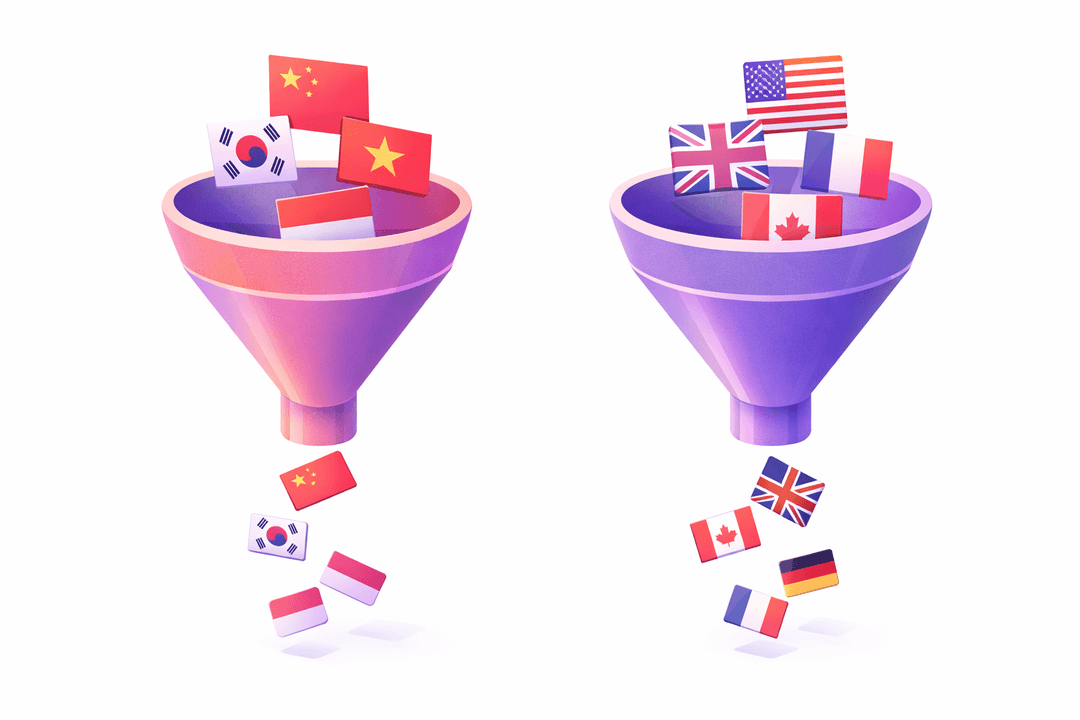
Asian platforms filter regional IPs more aggressively than their western counterparts.
A major South Korean search portal, for instance, prioritizes domestic traffic and throttles international requests.
This is a deliberate strategy to favor local users and control access. If you're running rudimentary proxy-based operations from outside the region, you'll hit walls quickly.
This requires a more sophisticated, geographically-aware proxy management system that can reliably route traffic through IPs in the target countries.
The legal labyrinth

Running a compliant web scraping operation for the Asian market requires navigating a legal patchwork, as each country sets its own rules on data privacy, copyright, and digital trespass.
This is especially true for data privacy, where even publicly visible information can be legally protected under laws in China, India, and Singapore.
Strict data transfer and localization rules in countries like China and Vietnam dictate where data can be stored, complicating infrastructure.
Furthermore, enforcement varies wildly, from heavy fines in South Korea to a more guidance-focused approach in Japan, requiring a country-by-country risk assessment for any scraping operation.
Getting a birds-eyed-view of the battlefield
For data leaders, attempting to build and maintain a full-stack, multi-region scraping operation in-house means committing to a high-risk, resource-intensive arms race against platforms that have dedicated resources focused solely on scraping prevention.
When these problems have already been solved at scale, the question shifts from “How do we build this?” to “How do we get the result?”
By entrusting the complex, ever-evolving task of data acquisition to a dedicated web data acquisition partner, in-house teams are liberated.
This allows an organization to operate at a higher level of abstraction, focusing its energy not on the how of data collection, but on the what – the products and insights that can be built with it.
Embarking on the journey to the east
In a market where information is fiercely guarded, the ability to acquire it is a significant competitive edge.
The difficulty of scraping data in Asia is a feature rather than a bug to organizations that get it right.